

The B2B and B2C world is becoming more complex every passing year with the number of customers you need to keep track of.
The complexity comes from the fact that many different roles need to work in tandem to keep the business moving.
Sales, marketing, and customer service… all of these roles need to collaborate.
While old-generation CRMs focused on sales, the new collaborative approach to CRMs is changing how we operate day to day.
What Is a Collaborative CRM?
A collaborative customer relationship management (CRM) system is a contact management software that allows different teams to work together to grow sales and boost customer experience.
This type of CRM focuses on streamlining communication and cooperation not only within the organization but also with customers, thereby optimizing customer service and enhancing the overall customer experience.
Unlike traditional CRMs, it approaches customer management through the perspective of different teams and how they interact with each other and every customer.
6 Components of a Collaborative CRM
A Collaborative CRM is built upon several core components that work together to enhance teamwork and customer engagement.
These components are designed to ensure that customer information and communication flow smoothly across all parts of the organization.
Here are the key components of a collaborative CRM:
Centralized Customer Database
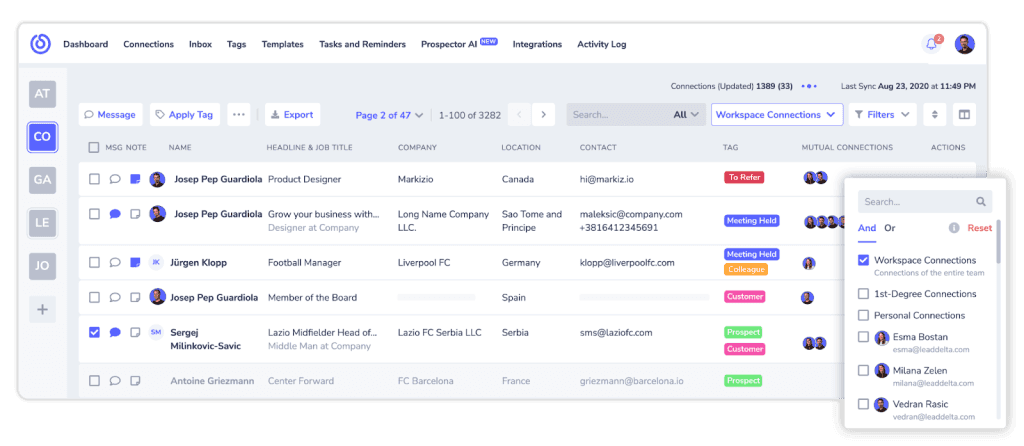
The centralized customer database is the heart of a collaborative CRM, acting as a single source of truth for all customer-related information.
It consolidates data from various touchpoints and interactions, making it accessible to all departments.
This centralization ensures that every team member, from sales to customer service, operates with the same information, leading to consistent and informed customer interactions.
For example, LeadDelta Workspaces allows entire businesses to merge all of their contacts into one place for better collaboration.
Team-Wide Communication
Team-wide communication tools are crucial for facilitating seamless collaboration among team members.
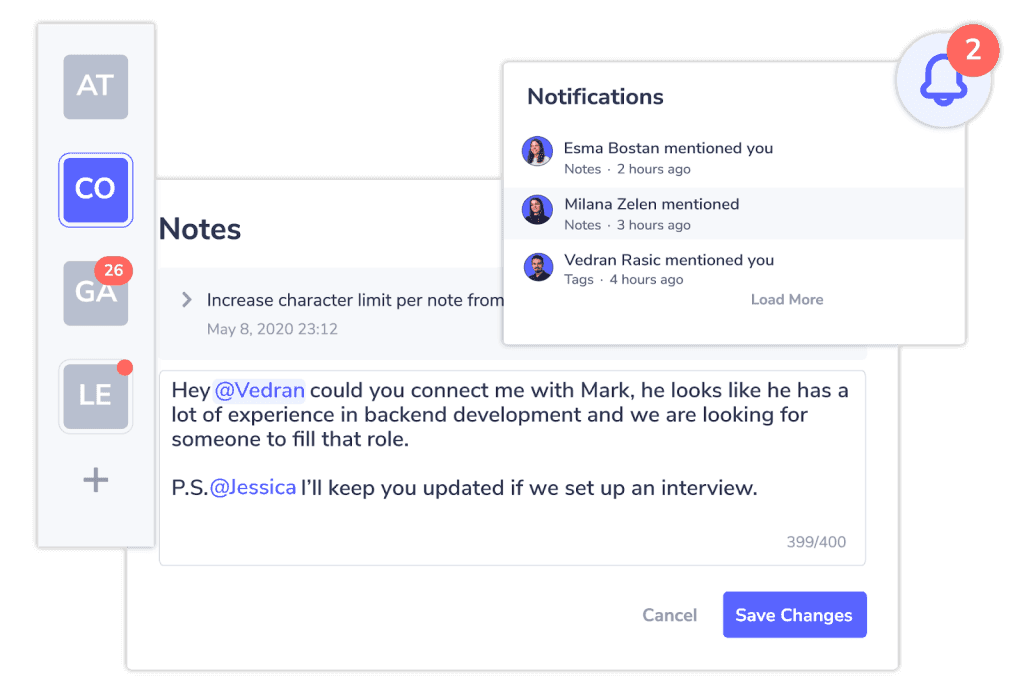
These CRMs enable instant messaging, email integration, and shared workspaces, allowing teams to discuss customer cases, share insights, and resolve issues collaboratively.
Every team member needs to understand the details behind every customer and who interacted with them.
Effective communication ensures that everyone is on the same page, enhancing the efficiency of customer management processes.
This feature can be represented through Notes attached to individual contacts like in LeadDelta allowing the team to communicate effectively.
Task and Activity Management
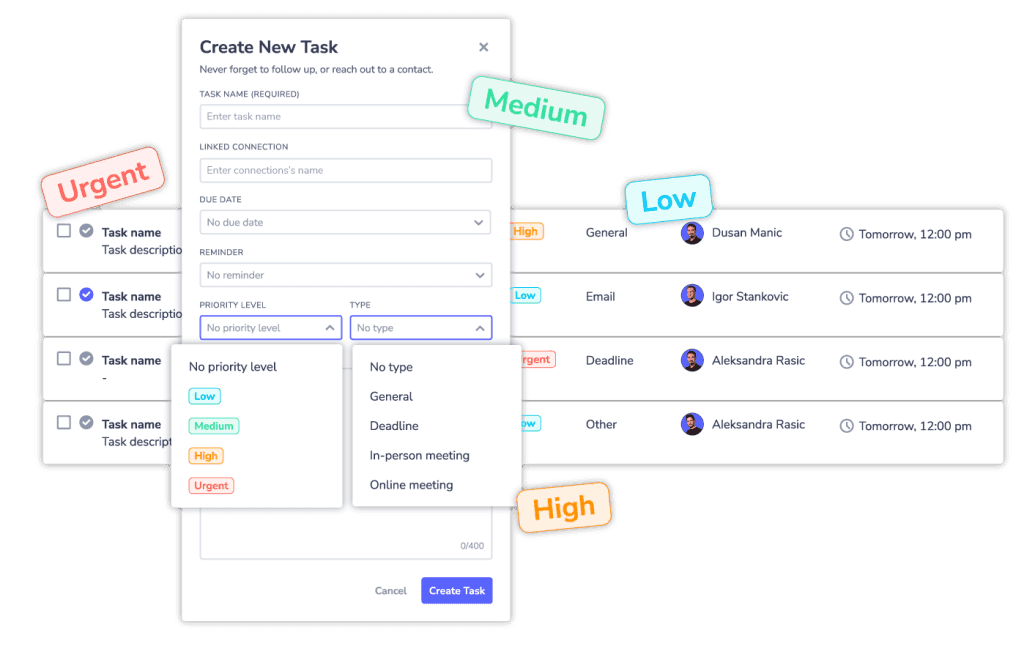
This component enables teams to organize, prioritize, and track customer-related tasks and activities.
It helps in assigning responsibilities, setting deadlines, and monitoring progress, ensuring that nothing falls through the cracks.
Tasks and Reminders are essential for maintaining a proactive approach to customer engagement and service.
Cross-Functional Collaboration
Cross-functional collaboration is facilitated through features that enable various departments to work together towards common goals.
By breaking down silos, collaborative CRM encourages a unified approach to customer service, sales, and marketing strategies.
This collaboration ensures that customer interactions are consistent and leverages the collective expertise of the entire organization.

Scalability
A collaborative CRM is designed to grow with your business.
Scalability ensures that the system can accommodate an increasing number of customers, users, and data without compromising performance.
This component is crucial for businesses looking to expand their operations and customer base over time.
System Integration
System integration capabilities allow collaborative CRMs to connect with other business tools and systems, such as email platforms, social media channels, and ERP systems.
This integration ensures a seamless flow of information across different software solutions, enhancing efficiency and providing a holistic view of customer interactions and business operations.
Most collaborative CRMs like LeadDelta have built-in integrations with industry-standard systems like HubSpot while allowing customization through Zapier integrations.

Benefits of Using Collaborative CRM Tools
While one may be reluctant to go over to a new collaborative approach from a traditional CRM, there’s much to look forward to.
Let’s take a look at some of the biggest benefits of a collaborative CRM.
Enhancing Customer Experience
One of the primary benefits of collaborative CRM is the substantial enhancement of customer experience.
Teams can provide personalized, timely, and consistent service across all touchpoints by ensuring that customer information and communication are centralized.
If the customer needs a technical solution, the IT personnel can jump in. The conversations are shared between the whole team letting everyone understand the customer.
This level of personalization and attentiveness leads to higher customer satisfaction, loyalty, and retention, as customers feel valued and understood.
Reduced Sales/Marketing Costs
Collaborative CRMs help in optimizing sales and marketing efforts by enabling better targeting and segmentation of customers.

With a unified view of customer data, businesses can identify cross-selling and upselling opportunities more effectively, reducing the cost of acquiring new customers.
Additionally, by streamlining processes and improving coordination among teams, companies can achieve more with fewer resources, further reducing costs.
Improved Internal Communication
The integration of team-wide communication tools within collaborative CRM systems fosters a culture of open and efficient communication.
This improvement in internal communication ensures that all team members are informed about customer needs, preferences, and feedback, enabling them to make better decisions and provide superior service.
Improved communication also helps in resolving issues more quickly, reducing response times and increasing customer satisfaction.
Data Availability and Accuracy
With a centralized customer database, collaborative CRMs ensure that accurate and up-to-date customer information is always available to team members.
This data availability is crucial for making informed decisions, personalizing customer interactions, and avoiding duplication of effort.
Accurate data also supports better analysis and reporting, enabling businesses to understand customer behavior and preferences more deeply.
Effective Team Processes
By facilitating task and activity management, collaborative CRM tools help teams to organize their work more efficiently.
The clear assignment of responsibilities, combined with the ability to track progress and collaborate on tasks, leads to more effective team processes.
This efficiency not only speeds up the resolution of customer issues but also frees up team members to focus on strategic activities that contribute to business growth.
Conclusion
In today’s fast-paced and increasingly digital marketplace, maintaining strong, meaningful relationships with customers is more crucial than ever.
A collaborative CRM stands at the forefront of this challenge, offering an innovative solution that transcends traditional CRM functionalities.